
Cybersecurity In 2026: Why Hotels And Lodges Remain Prime Targets For Ransomware Attacks

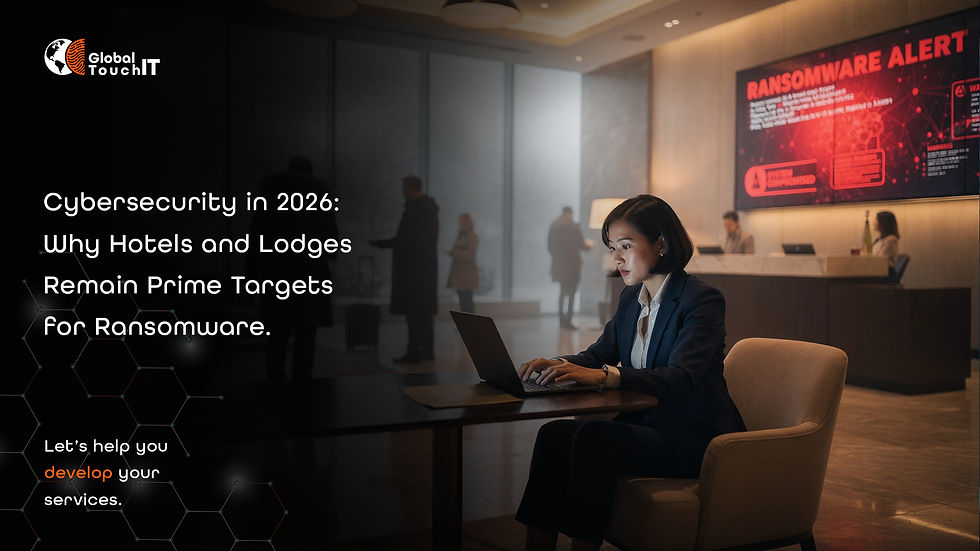
We’re barely into 2026, and the ransomware threat to hospitality has already intensified. Just last week, reports emerged of Russian-linked hackers targeting European hotels with sophisticated phishing campaigns - fake Booking.com reservation cancellations that trick staff into running malicious code, that was disguised as system error fixes like bogus Blue Screens of Death (BSOD). Meanwhile, groups like RevengeHotels have resurfaced with AI-enhanced attacks, hitting properties in Latin America and beyond to steal guest payment data.
These aren’t isolated incidents. Hospitality remains a top target because you collect exactly what cybercriminals crave: high volumes of personal and financial data, combined with operational pressure to restore systems quickly during peak occupancy. A single breach can encrypt your PMS, lock reservations, disrupt POS terminals, and expose guest records all potentially leading to huge losses in downtime, fines, and lost trust.
In 2025, we saw multiple successful cyberattacks on hotels, with many of these properties facing multiple incidents. Globally, ransomware demands averaged millions, and hacker groups have evolved and are using double extortion: encrypt data and threaten to leak it. This year, we predict even sharper threats from AI-crafted phishing that’s nearly undetectable, exploitation of IoT devices (smart locks, guest apps, connected thermostats), and Ransomware-as-a-Service making advanced tools accessible to more attackers.
SO, WHY DO HOTELS AND GAME LODGES STAY VULNERABLE?
Rich data: Credit cards, passports, and loyalty profiles fetch premium prices on the dark web.
Urgent operations: Downtime during high season means instant revenue loss - attackers know you’re more likely to pay.
Expanded surfaces: Cloud integrations, guest Wi-Fi, and third-party vendors create countless entry points.
Legacy gaps: Many properties still run outdated systems without modern defences.
The cost isn’t just financial. Brand reputation damage is what lingers. It is almost guaranteed that guests won’t return to a property who compromises their data, and then the negative reviews spread fast further damaging the brand. Reactive measures no longer are sufficient, now is the time to shift to a proactive approach that makes use of layered defences: zero-trust networks, AI-driven threat detection, and rapid recovery plans.
QUESTIONS YOU SHOULD ASK NOW:
It is best to not wait for a ransomware attack or incident. We suggest that your next ops or board meeting should have time allocated to ask and answer the following:
When was our last penetration test, and what hospitality-specific vulnerabilities emerged?
Do we have 24/7 monitoring for ransomware indicators across all systems, including IoT and guest networks?
Are third-party integrations (Booking.com, OTAs, vendors) fully segmented and monitored?
Have we simulated a ransomware attack in training, including decision-making on payments?
What’s our per-hour downtime cost, and do we have insurance cover for extortion demands and recovery?
Is quarterly phishing and training mandatory for all staff?
Do we enforce 2FA, especially on remote logins?
Do we have up-to-date backups and how fast can we restore from these backups?
Any uncertainty in the questions or answers demands action. That action is contact the Global Touch IT team and set up a meeting.
CONTACT THE EXPERTS
Ransomware isn’t slowing down; it’s getting smarter. But with expert guidance, you can neutralise threats without disrupting guest experiences. The team at Global Touch IT delivers tailored cybersecurity for hotels, guest houses and game lodges - from threat hunting to managed detection and response. Trust the experts, trust Global Touch IT


Comments